Bedding, made simple
Duvet Covers and Bed Skirts: How to Choose the Right Finishing Layers
A duvet cover and a bed skirt may both help a bed look finished, but they do very different jobs. One protects the insert you sleep under; the other softens the view of the bed base and the space beneath it. Here’s how to decide whether your room needs one, both, or neither—and how to make the layers feel considered rather than crowded.
Two layers, two distinct jobs
A duvet cover is a removable fabric casing for a duvet insert. Think of it as a washable outer layer: it shields the insert from everyday soil, adds color and texture to the bed, and can be changed when the season or your mood shifts. Most covers have an opening at one end, closed with buttons, ties, snaps, or a zipper. Inside, corner ties or loops may connect to matching points on the insert to help prevent bunching.
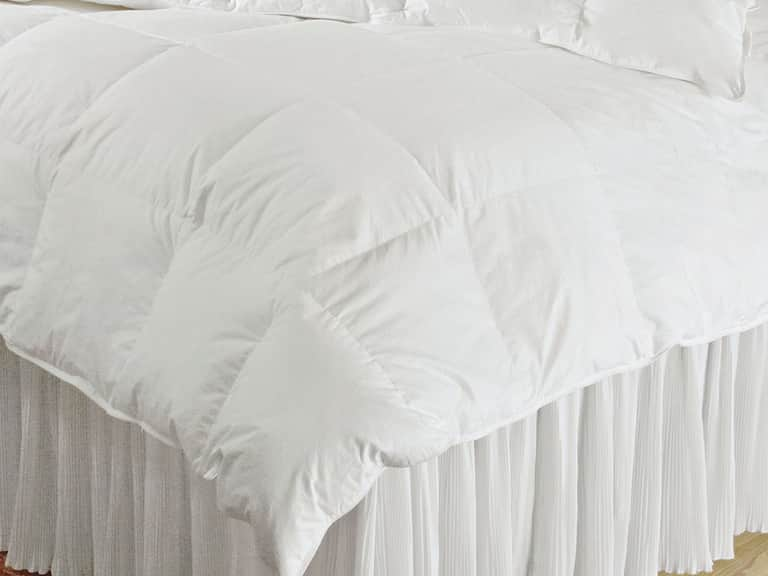
A bed skirt, sometimes called a dust ruffle, sits between the mattress and the bed frame or box spring. Its fabric falls around the sides of the bed, concealing the frame, legs, or under-bed storage. It does not protect the duvet and is not a substitute for a bed cover. Instead, it works like a finishing border, making the bed base feel more integrated with the room.
Because the pieces cover different areas, using both is entirely reasonable. A cover dresses the top of the bed, while a skirt addresses what is visible below the mattress. But a bed does not need every possible layer to look complete. A streamlined platform bed, for example, may look best without a skirt, while a duvet insert still benefits from a cover.
Why a duvet cover can make everyday bedding easier
The practical appeal is straightforward: the cover is generally easier to remove and launder than a bulky insert. Since it sits between the sleeper and the fill, it takes on much of the routine contact with skin, hair, and dust. Regular laundering according to the care label can help keep the bed fresh while reducing how often the insert itself needs cleaning.
A cover also gives an insert more versatility. A simple white or neutral insert can take on a new look with a different cover, and a lighter fabric can feel more at home in warm weather than a heavier, textured option. The insert remains the source of most of the warmth; the cover influences the feel, appearance, and ease of maintenance.
For a tidy fit, check how the cover closes and whether it includes internal ties. Match the ties to the insert’s loops, if both have them, and secure each corner before shaking the duvet into place. A cover that fits the insert reasonably well is less likely to develop large empty pockets or pull awkwardly across the bed. Exact dimensions matter, but so do the insert’s loft and construction: an especially lofty insert can fill a cover more fully than a flatter one with the same listed measurements.
Getting the insert inside can feel like the least glamorous part of making the bed. A useful approach is to turn the cover inside out, lay it over the insert, tie the corners together, and roll or shake the layers into place. Once the cover is right-side out, fasten its closure and give the duvet a gentle fluff. The result should look relaxed, not stretched tight.
What a bed skirt adds—and what it doesn’t
A bed skirt is primarily a visual and organizational choice. It can conceal a box spring, bed frame, or the practical collection of storage bins that tends to gather underneath. In a room where the lower part of the bed is prominent, that uninterrupted fabric line can make the whole bed appear more polished.
It will not provide meaningful insulation, add cushioning, or replace a mattress protector. Nor does it make an open space under the bed disappear in a functional sense: items stored there still need to be accessible. If you use under-bed drawers, a long skirt might hide them when closed, but it can become an inconvenience if it catches or needs to be lifted every time you reach for something.
Think about the bed’s design before choosing one. A traditional frame with visible legs may suit a tailored skirt, while a low platform bed may have little need for one. Some modern frames are designed to be seen; covering their structure can make the room feel more fussy rather than more finished. If you like the look of the frame or want easy access to storage, leaving the sides exposed can be the more intentional decision.
Start with the room, not the shopping list
Before adding layers, take a look at the bed as it is. Is the insert exposed and difficult to clean? Does the bed base look unfinished? Is under-bed storage visible in a way that distracts from the room? Do you want the bed to feel crisp and tailored, soft and relaxed, or somewhere between the two? These answers clarify which layer will make a real difference.
If the main need is protecting an insert and changing the bed’s look, begin with a duvet cover. If the main issue is a visible frame or clutter underneath, consider a bed skirt. If both issues are present, both layers may be useful. If neither is bothering you, there is no styling rule that says you must add them.
- Choose a duvet cover when you want a washable outer layer, a new color or texture, or a convenient way to dress an insert.
- Choose a bed skirt when you want to conceal the bed base or create a softer visual transition between mattress and floor.
- Use both when the top of the bed and the area beneath it each need attention.
- Skip either layer when your existing bed already looks and functions the way you want.
How to coordinate fabric and color
Matching every piece is one route to a coordinated room, but it is not the only one. A bed can feel cohesive when the colors relate without being identical. For example, a quiet duvet cover can sit comfortably above a skirt in a similar neutral, while a subtle difference in texture keeps the layers from looking like one uninterrupted block of fabric.
For a calm, classic effect, choose a bed skirt close in color to the sheets, bed frame, or duvet cover. A skirt that blends with the wall or floor can recede visually, while a contrasting skirt draws attention to the lower edge of the bed. Neither is inherently better; the right choice depends on whether you want the bed base to disappear or become part of the design.
Texture offers a low-pressure way to add interest. Smooth cotton, crisp percale, softly lustrous sateen, and woven or quilted surfaces all create different impressions. If the duvet cover has a noticeable pattern or elaborate detailing, a quieter skirt can help the overall arrangement feel balanced. Conversely, a simple cover leaves room for a more textured lower layer.
Consider the room’s existing materials, too. Wood, metal, upholstered furniture, rugs, and curtains all contribute to the visual mix. A restrained palette can make a small room feel less busy, while a patterned cover may bring personality to a bedroom with mostly plain surfaces. To keep the layers from competing, repeat one color in at least one other element in the room, such as a pillowcase, throw, or rug.
Get the proportions right
Good proportions are what make finishing layers look effortless. For a duvet cover, check that its listed size suits the insert and the bed. A cover that is too small may compress the insert or pull it away from the mattress edges; one that is much too large can leave the fill sliding around inside. The amount of overhang you prefer is a matter of taste, but the cover should drape in a way that feels balanced on both sides.
A bed skirt’s drop is the distance from the top of its platform or foundation to the floor. Measure from the spot where the skirt will rest down to the floor, then compare that measurement with the skirt’s stated drop. The goal is usually a hem that falls neatly near the floor without dragging. A skirt that is too short may leave the frame exposed; one that is too long can bunch, collect dust, or get caught beneath the bed.
Mattress height, foundations, and bed frames vary, so avoid relying on a standard size alone. Measure your actual setup. If the bed has a deep mattress or a tall foundation, a skirt intended for a lower bed may not cover the frame properly. If the frame has adjustable height or a thick mattress topper, take those details into account before choosing.
There are several ways a skirt can attach. A traditional design may have a panel that lies between the mattress and foundation, while some styles attach with fasteners or wrap around the frame. Each system has trade-offs. A mattress-lift style can be simple but may take two people to position; a wraparound design can be easier to adjust but needs to suit the frame’s shape. Check how it is secured and whether it will stay in place as the bed is used.
A note on fabric, care, and daily life
Because a duvet cover is handled and washed more frequently than a bed skirt, its care instructions deserve close attention. Choose a fabric and finish that fit the way you live. A busy household may benefit from a cover that can be laundered at home; a delicate fabric may require more careful maintenance. Always follow the specific label, since washing and drying guidance can differ even among fabrics that look similar.
Bed skirts usually see less direct contact, but they can collect dust near the floor. Consider how easy the skirt is to remove and clean, especially if someone in the household is sensitive to dust or if pets spend time in the bedroom. A floor-grazing hem may look elegant, but a slightly shorter drop can be more practical in a room where the floor needs frequent cleaning.
Care routines do not need to be complicated. Wash or refresh bedding as recommended by its care label, and check the skirt occasionally for dust or marks. When changing a cover, inspect the duvet insert and its seams. If you are storing a seasonal cover or skirt, make sure it is clean and completely dry before putting it away. A breathable storage bag or clean linen closet is generally a better choice than sealing damp fabric in a space where moisture could linger.
Common choices that can make the bed feel less polished
One frequent misstep is choosing a skirt before measuring. A beautiful fabric cannot compensate for a hem that rides too high or pools heavily on the floor. Another is overlooking how the bed is used. If you reach beneath the mattress for storage every day, a skirt that must be repositioned each time may quickly become frustrating.
With duvet covers, the most common issue is a mismatch between cover and insert. If the insert shifts into one corner or looks uneven, check the dimensions and use the internal ties where available. It also helps to shake the duvet from the bottom corners after changing the cover, rather than trying to pull the fabric into place from the top alone.
Finally, avoid adding layers simply because a bed looks bare in a catalog or decorating photograph. The room needs to work for its occupants. A carefully chosen cover and a neatly made bed can feel complete without a skirt; a skirt can add a useful finishing touch without a decorative pile of extra blankets. Comfort and easy care are part of good style.
A quick decision guide
Imagine the bed in three parts: the sleeping surface, the visible sides, and the floor beneath. If the sleeping surface needs protection or a change of style, focus on the duvet cover. If the sides and under-bed area need a cleaner outline, consider a bed skirt. If the room already feels balanced, keep the setup simple.
For a tailored look, choose coordinated colors, secure the duvet insert evenly inside its cover, and make sure the skirt’s drop is appropriate for the frame. For a more relaxed look, mix complementary shades and textures while keeping the bed’s proportions in mind. Either approach can work beautifully when the layers are chosen with a purpose.
The finishing touch should make life easier
Duvet covers and bed skirts are not interchangeable, and neither is essential in every bedroom. A cover protects and refreshes the duvet insert; a skirt hides the frame and softens the view beneath the mattress. Together, they can create a polished, layered bed, but their value comes from how well they serve the room—not from simply having more fabric.
Measure before choosing, consider how often you want to launder each piece, and pay attention to the bed’s frame, storage, and overall proportions. When color and texture feel connected and the layers suit your everyday routine, the result is more than a neatly made bed. It is a restful space that looks considered without feeling overdone.